 Home
Home
Start Date
September
UCAS Code
VDS221
Institution Code
BCA
Duration
Full Time: 1 year
Part Time: 2 years
Course Fulltime Fees
£10,800 per year
COURSE OVERVIEW
This professionally focused, 12-month practice-based master’s degree in music production aims to help students develop a specialist understanding of advanced music production tools, techniques and processes through the creation of a significant body of original work demonstrating a distinctive artistic personality. During the first term of this music production course, students will develop, workshop and record a body of songs and compositions which will then be taken through an advanced mixing and mastering processes in the second term. Students will also devise and test strategies to launch, market and continuously develop their professional personas and undertake a major body of creative and professional work over the summer, which could culminate in the creation of an album, a score for a feature-length film or the completion of an industry placement as part of the music production degree.
An associate college of:


COURSE DETAILS
Semester 1
- Casting & Recording Management
- Songwriting
- Synthesis & Sound
Semester 2
- Arranging
- Digital Distribution & Marketing
- Post-Production Mixing & Mastering
Semester 3
- Major Project
ENTRY REQUIREMENTS
MMus Music Production
Postgraduate (Level 7):
- A minimum second-class honours degree in a relevant subject from a UK awarding body or college recognised equivalent international qualification.
- Significant equivalent professional experience will also be considered
- English language competency equivalent to CEFR Level C1 (7.0 overall, 6.5 in each category). If English is not your first language.
FAQ’s
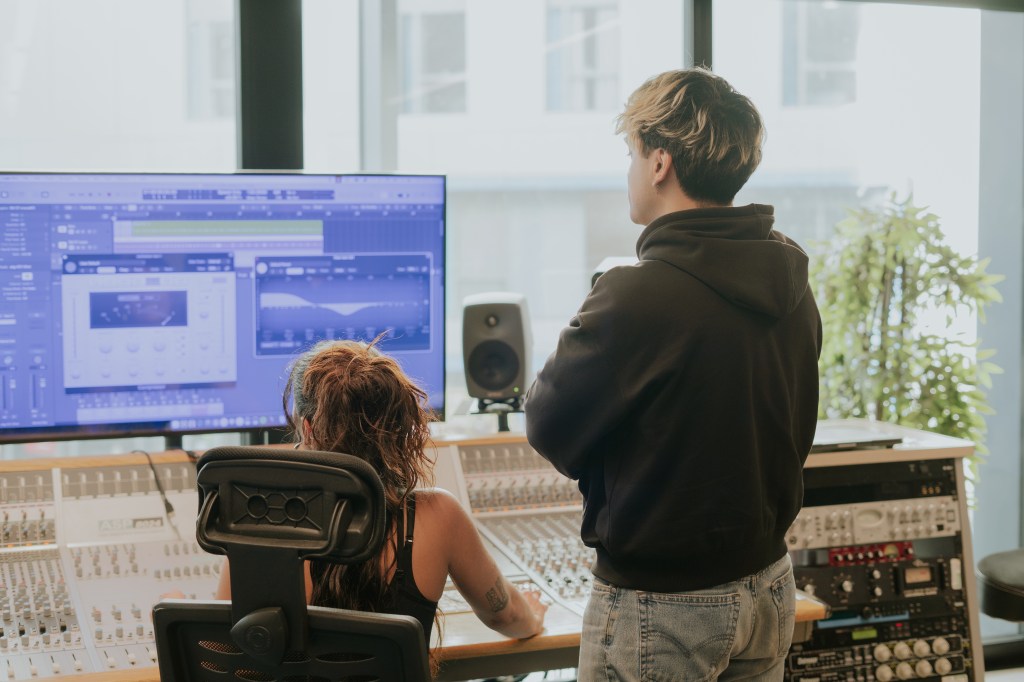
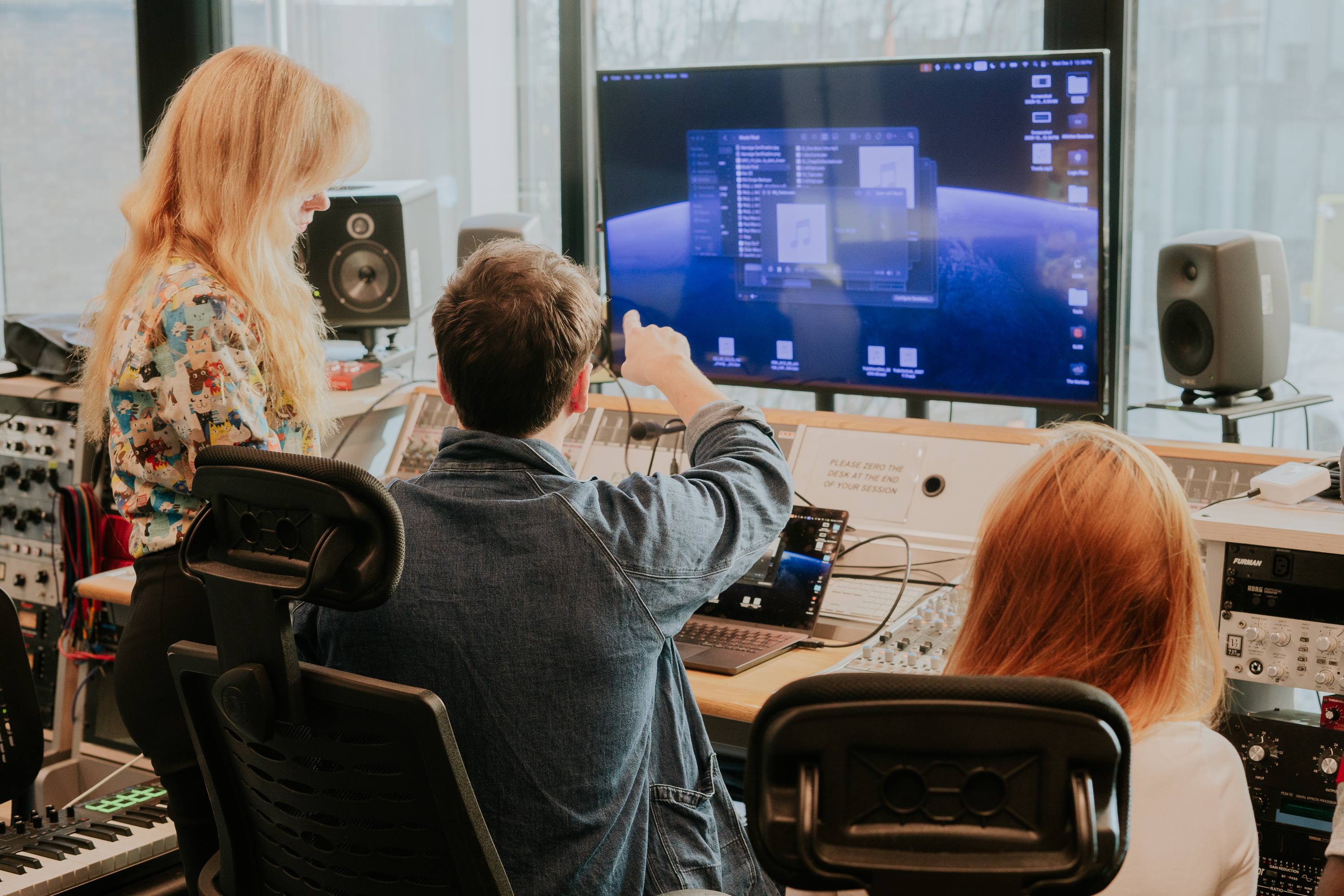
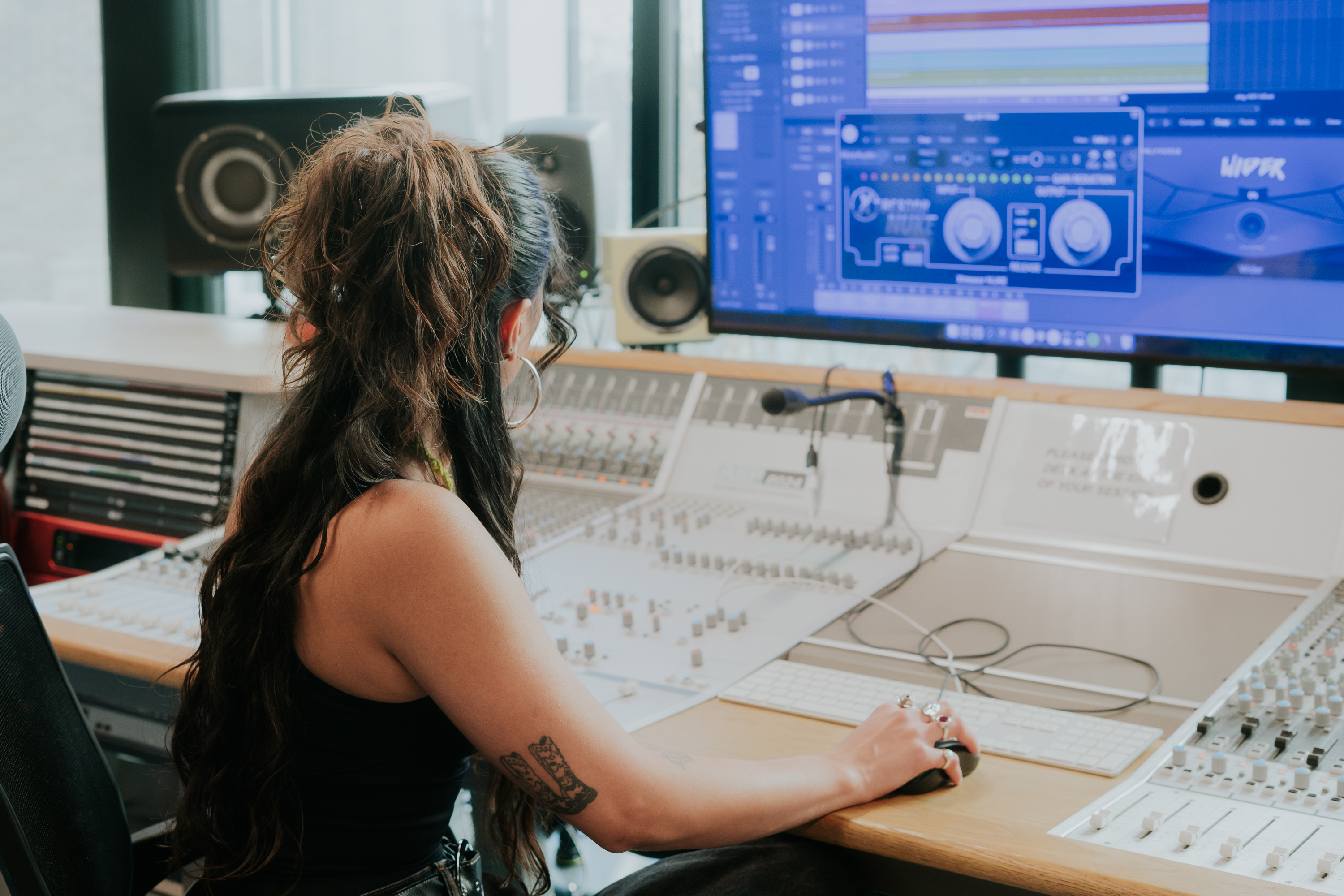
You’ll work with professional music production equipment and DAWs throughout your music production course. The MMus covers advanced studio practices and production techniques across digital, analogue and hybrid environments. Any specific equipment or software you need for your own projects will depend on the direction of your work, so check with the course team for current requirements.
The MMus can be studied full-time over 12 months or part-time over 24 months. Whichever route you choose, independent work is a major part of the course, accounting for around 90% of your learning hours. You’ll balance this with scheduled teaching while developing productions, research and self-directed projects around your own creative and professional goals.
The master’s in music production is strongly practice-based, with much of the course centred around developing and delivering your own production projects. You’ll work with recording, sound design, mixing and post-production techniques, while developing original recorded music to professional standards. You’ll also gain experience managing projects and working independently and collaboratively.
You’ll have opportunities to build your network through guest speakers, masterclasses and LCCM’s connections with the music industry. Workshops with professionals from different areas of the industry take place throughout the course, while tutors bring current professional experience into their teaching. You’ll also have access to professional networks and external production opportunities where appropriate.
Yes. The music production course covers the business and professional skills needed to build a career alongside your creative and technical development. You’ll explore current business practices within the creative industries and learn to plan, manage and deliver professional projects, helping you understand the realities of working independently, collaboratively or within larger organisations.
You’ll study Digital Distribution & Marketing as a compulsory part of your music production degree in London. The module explores the professional and business side of getting music to audiences, while assessments can include developing marketing plans. This sits alongside the course’s wider focus on building the entrepreneurial and professional skills needed to navigate today’s music industry.
Yes. Post-Production Mixing & Mastering is a compulsory module, while Composition for Film & Other Media is one of the optional modules available on the programme. You can also choose from areas including songwriting, arranging and synthesis and sound, giving you scope to develop specialist production skills around your own creative interests and career direction.
Your Major Project is a self-directed body of original work that brings together the skills and direction you’ve developed throughout your master’s degree in music production. Earlier projects build towards it, giving you the freedom to shape the final work around your own creative and professional ambitions. The Major Project can also include an opportunity to undertake and reflect on a work placement.
A master’s in music production can prepare you for careers including music producer, recording engineer, mixing or mastering engineer, sound designer and other production-based roles. You could work freelance, develop your own creative projects or work within a larger organisation, with the course designed to develop the technical, creative, business and project management skills needed across professional production settings.
You’ll build a substantial body of original work throughout the music production Master’s degree, with projects designed to reflect professional production practice. Your work can include recorded music, sound design, mixing and post-production, alongside project and marketing materials. This culminates in your Major Project, giving you the opportunity to demonstrate your individual creative voice and professional production skills.