 Home
Home
Start Date
September
UCAS Code
MAC000
Institution Code
L83
Duration
3 Years
Course Fulltime Fees
September Fees: £9,790 per annum
COURSE OVERVIEW
The BMus (Hons) Music Production & Sound Engineering course focuses on the creation, development and delivery of commercial audio. As audio creators we are reliant on technologies which afford us many creative careers. The course encourages you to explore these technologies and their contextual practice, understanding their history and relevance to future associated industries. Areas of study include basic to advanced recording, mixing, mastering techniques in both analogue and digital landscapes and spatial audio experiences for emerging technologies. Modules are designed to integrate skills, knowledge and understanding of commercial music industries and their future development.
EMPLOYMENT PROSPECTS
- Record Producer (Commercial & Independent Artists): Works with artists to develop and shape their sound.
- Beat Maker/Sample Creator: Produces beats for hip-hop, pop, and electronic music or sells sample packs.
- Mixing Engineer: Specializes in blending recorded tracks into a polished, cohesive sound.
- Mastering Engineer: Prepares final mixes for distribution by optimizing sound quality across platforms.
- Sound Designer (Film, TV, Games, Theatre): Creates audio textures, effects, and atmospheres for media productions.
- Live Sound Engineer: Manages and optimizes live concert audio for artists and venues.
- Music Tech & Gear Developer: Works with companies designing plugins, software, and hardware for music production.
- AI & Algorithmic Music Producer: Uses AI tools and generative music technology for innovative compositions.
- Studio Owner/Manager: Runs a recording space, renting out time and services to artists and businesses.
COURSE DETAILS
- Year 1
- Year 2
- Year 3
SEMESTER 1
Compulsory Modules
Practical Theory
Instrumental Studio
Studio & Production 1
Music Programming 1
SEMESTER 2
Compulsory Modules
Mix Concepts
Audio Technology: Then, now and next
Studio & Production 2
Music Programming 2
SEMESTER 1
Compulsory Modules
Music Programming 3-Sound Design
Audio Mastering
Spatial Audio
SEMESTER 2
Compulsory Modules
Live Sound
Contemporary Electronica
Optional Modules
Studio & Production 4 (Vocal production)
Composing for Games
Industry Placement
Practical Theory 2
SEMESTER 1
Compulsory Modules
Creative Production
Composing for Media
SEMESTER 2
Compulsory Modules
Working in the Music Industry
Professional Portfolio
TUTOR HIGHLIGHTS
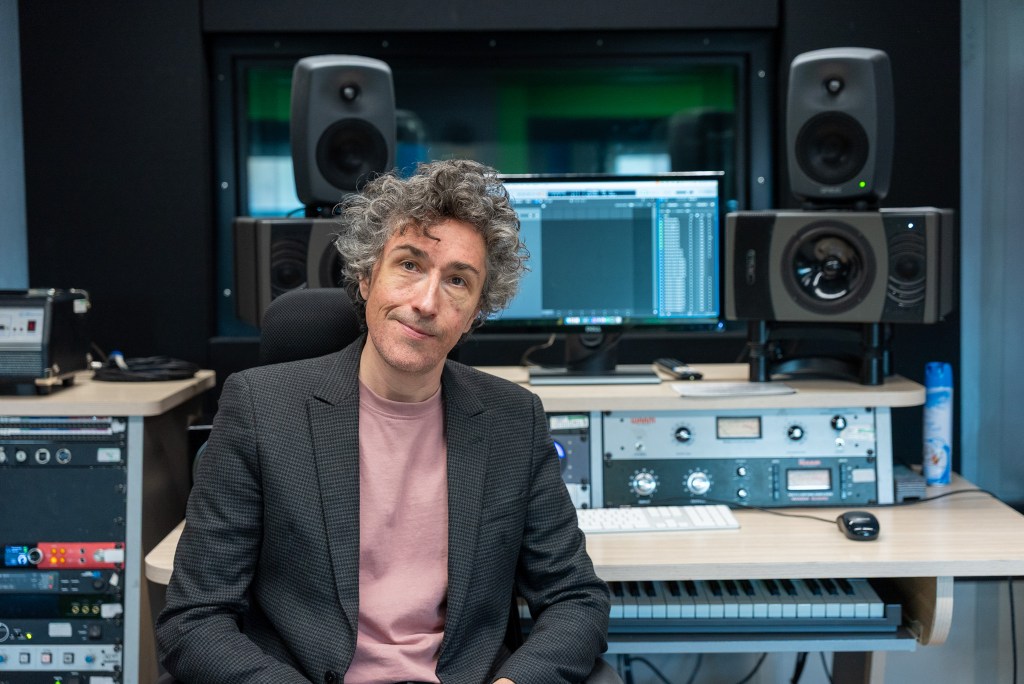
OLIVER BETTS
Programme Leader for BMus Music Production & Sound Engineering
Olly is an engineer, producer, drummer, and signed artist since 2003 with Universal, Shangri-La, and Wixen Music.
Sync credits: GTA V, Guitar Hero, Batman Arkham City, Gossip Girl, Twilight, The Inbetweeners, 17 Again, and major brands like Dr. Martens, Burberry, and Adidas Y3.
Worked with: The Duke Spirit, UNKLE, CMAT, Thurston Moore, Josh T Pearson, Deep Throat Choir, Andy Burrows, Tim Wheeler, and more.
Collaborated with producers/engineers: Andrew Scheps, Flood, Alan Moulder, Chris Goss, David Wrench, Catherine Marks. Recorded at Abbey Road, Sunset Sound, Rancho De La Luna, RAK, Rockfield, and Village Recorders.
As a drummer, toured globally with The Duke Spirit, supporting REM, QOTSA, Bob Dylan, The Black Keys, Jane’s Addiction, and Incubus. Played Glastonbury, Coachella, Roskilde, Reading & Leeds, and more.
TV: Jools Holland, Letterman, Kimmel, Leno, Conan. Performed at Hollywood Bowl, O2, Royal Albert Hall, Wembley, Radio City Music Hall, Eden Stadium.
ENTRY REQUIREMENTS
BMus (Hons) Music Production & Sound Engineering
Undergraduate (Level 4):
- 96 UCAS points from accepted Level 3 qualifications, or equivalent experience
- Successful interview
All applicants meeting the minimum entry requirements and whose application demonstrates the capability to complete this programme will be offered an interview.
The course is taught in English. If you are not a native speaker you will need to demonstrate fluency in reading, writing and oral English at interview/application stage. You may be asked to prove this via a third party test where you should score, as a minimum, the following points: IELTS 5.5 or Duolingo 95
FAQ’s
You’ll develop practical skills across music production and sound engineering while finding your own creative direction. The course covers studio production, music programming, mixing, mastering, sound design, spatial audio and live sound. You’ll learn by doing, using industry-standard technology and workflows while building experience that prepares you for professional work in music and audio.
You’ll use industry-standard music production technology and workflows throughout the music engineering course. Your practical work will cover studio production, music programming, mixing, mastering and sound design, giving you experience with the tools used in professional production. The specific DAWs and software may change as technology develops, so check with the course team for the current setup.
You don’t need professional music technology experience to apply for LCCM’s sound engineering courses in London. Entry requires 96 UCAS points or relevant experience in music, alongside an audition. You’ll develop your technical skills throughout the course, starting with areas such as studio production, music programming, mixing and audio technology before progressing to more advanced work.
You don’t need to be a professional instrumentalist, but musicianship forms part of the Music Production and Sound Engineering degree. In your first year, you’ll study Instrumental Studio and Practical Theory alongside production, programming, mixing and audio technology, helping you develop a broader understanding of music alongside your creative and technical production skills.
Practical learning is a major part of the course. Your music production classes in London include practice-based workshops, live projects and production work, with modules covering studio production, mixing, mastering, sound design, spatial audio and live sound. You’ll apply new techniques directly to your work, with projects becoming more independent as you progress through the degree.
Yes. You’ll work collaboratively throughout the music engineering degree, sharing ideas and developing projects with other students. Group work is used to build the teamwork and communication skills needed in professional music environments, while the course is designed to develop your confidence collaborating across different technical and creative settings.
You’ll study at LCCM’s Music Box, with access to professional facilities and industry-standard technology for music production and sound engineering. You’ll use these environments to develop practical experience across studio production, mixing, mastering, sound design, spatial audio and live sound, putting new techniques into practice as you develop your own projects.
Your application includes an audition, but the course specification doesn’t state that recordings or compositions are compulsory. Applicants who meet the minimum entry requirements and demonstrate the potential to complete the Sound Engineering and Music Production course will be invited to audition. You’ll receive guidance on what you need to prepare as part of the application process.
You could pursue careers including music producer, sound engineer, audio editor or technician, sound designer and media composer. The skills developed on the course can prepare you for different areas of professional music and audio production. You can also progress to postgraduate study in areas including music production, film scoring, contemporary music composition or entrepreneurship.
The BMus is a three-year undergraduate degree that builds your skills across music production, sound engineering and musicianship, while the MMus is an advanced postgraduate course for experienced producers. Both music production and sound engineering courses are practice-based, but the MMus places greater emphasis on advanced production techniques, specialisation and self-directed professional projects.