Home
Home
The role of a music producer is one of the most exciting – and misunderstood – careers in the music industry. Some producers write beats and compose tracks from scratch, while others specialise in recording artists, shaping arrangements or mixing. There isn’t a single path into the profession because there isn’t a single type of music producer.
As LCCM’s Head of Music Production, Oliver Betts, puts it: “It’s a tricky one because the moniker of a ‘Music Producer’ is hugely varied. For example, the legendary Rick Rubin doesn’t play a note of music or engineer in any way, shape or form, yet is a Grammy-winning music producer.”
To help cut through the noise, we spoke to Oliver about the skills, experience and habits he believes aspiring producers should focus on first. Here are some of his top recommendations for getting started.
Build a strong foundation
There are countless ways to approach music production, but every producer benefits from mastering the fundamentals. A good place to begin is focusing on building the technical skills that will allow you to bring your sound to life.
Learn to use multiple DAWs
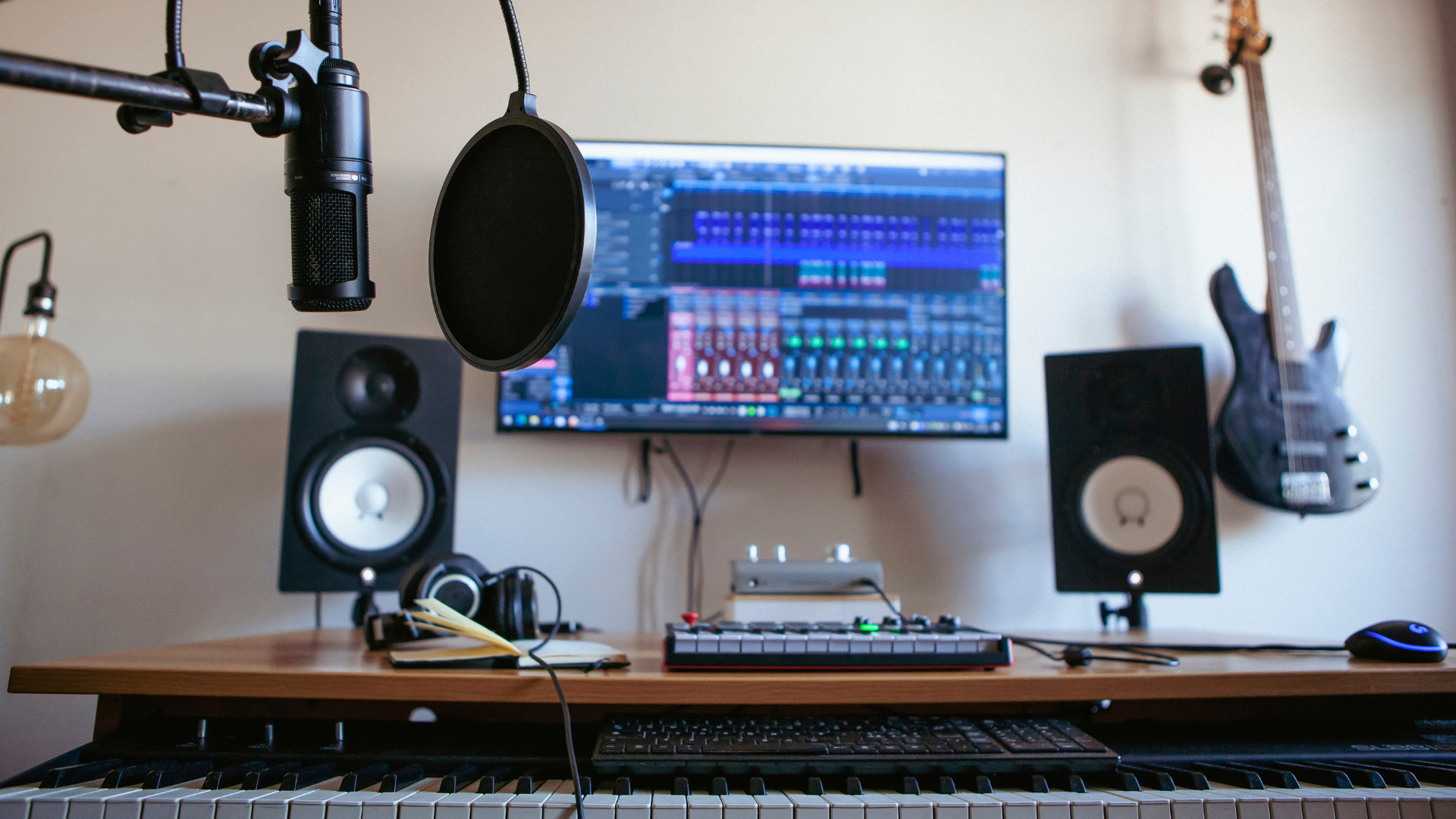
A Digital Audio Workstation (DAW) is the software used to record, edit and produce music. Popular examples include Logic Pro, Ableton Live, Pro Tools and FL Studio.
While it’s natural to have a favourite, Oliver recommends learning how to work across multiple DAWs rather than relying on just one. As he puts it: “We don’t just learn to drive just one car – we learn to drive. Learn to ‘DAW’.”
Understanding different workflows will make you a more versatile producer and prepare you to collaborate in a wider range of creative and professional environments.
If you’re wondering which software and technology are actually worth learning, take a look at our guide to the top music technology every music student uses.
Practise recording audio
Practise with an audio interface by recording singers, guitarists or other musicians whenever you have the opportunity. As well as improving your technical knowledge, working with real performers will help you develop communication and collaboration skills that are invaluable in the studio.
Master the basics of mixing
EQ allows you to shape the tonal balance of individual sounds, while compression helps control dynamics and create a more polished, consistent mix. These are two of the most important tools in modern music production, making them well worth learning early in your journey.
Develop your creative practice
Music production is a creative discipline, and the best way to improve is by making music regularly and developing your own approach to the production process.
Learn to programme beats with MIDI
MIDI is a fundamental tool in modern music production, allowing you to programme drums, instruments and melodies digitally within your DAW. Learning how to create and edit MIDI performances will give you greater creative flexibility and control over your productions.
The more comfortable you become creating rhythms, melodies and chord progressions, the easier it will be to turn your musical ideas into fully realised tracks.
Experiment with loops
Loops are a valuable creative tool for developing your production skills. Platforms such as Apple Loops and Splice provide access to a huge range of sounds that can help you explore different genres, arrangements and production techniques.
Spend time experimenting with editing, layering and manipulating loops to create something unique. This will help you build confidence in your production decisions while developing your own creative style.
Build your own creative workflow
Every music producer develops a different way of working. As you gain experience, you’ll discover the creative process that works best for you – whether that’s starting with base, a chord progression, vocals or a sample.
Over time, you’ll not only become more efficient, but also begin to develop a sound and workflow that’s uniquely your own.
Collaborate with other musicians
Music production isn’t something you have to learn alone. In fact, some of the biggest leaps in your development will come from working with other people.
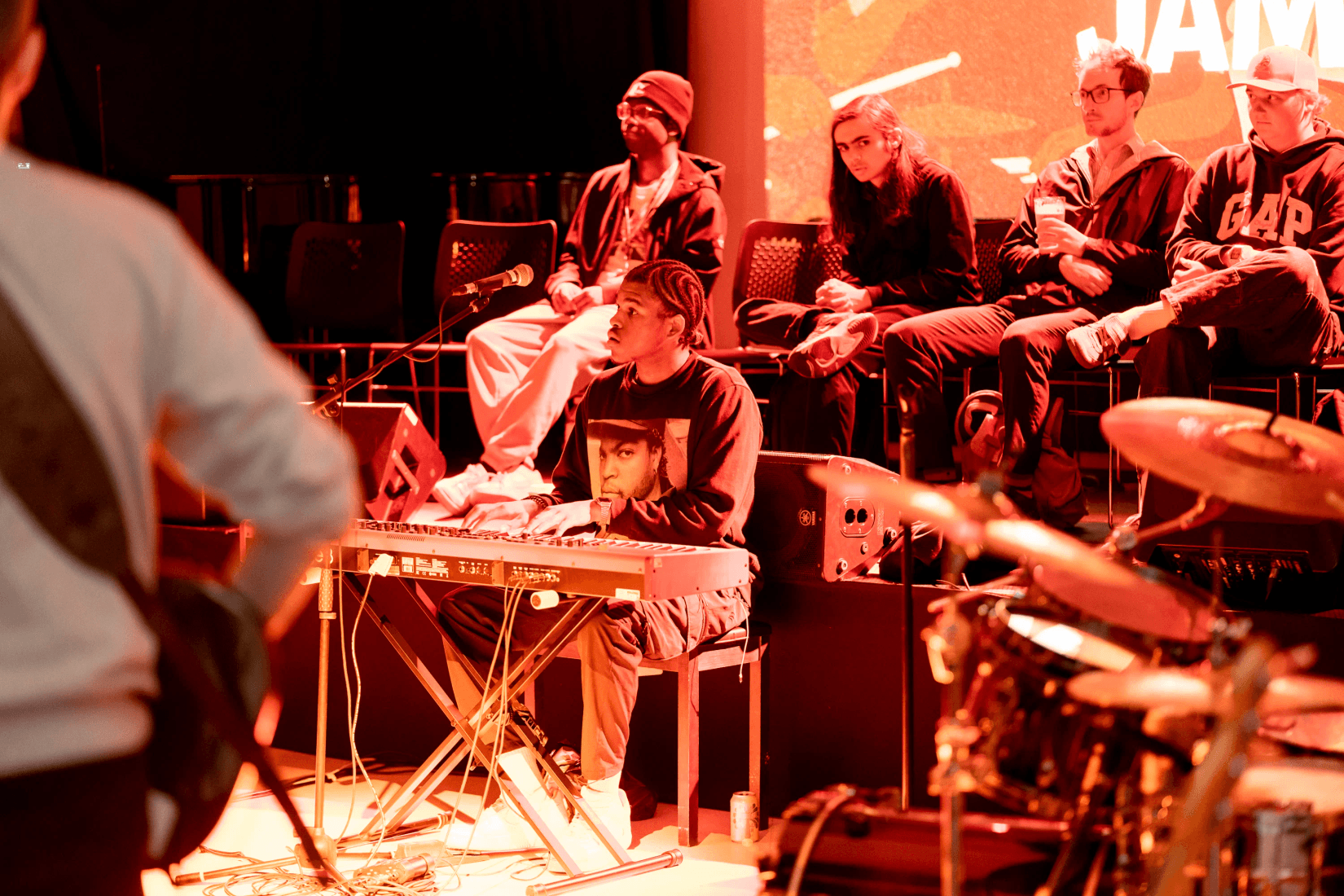
Oliver recommends collaborating with other producers and artists whenever you have the opportunity. Recording vocalists, producing tracks for songwriters or working alongside fellow producers will expose you to different creative approaches, challenge your ideas and help you develop the communication skills needed in professional studio environments.
What’s worth spending money on?
One of the biggest misconceptions about music production is that you need an expensive studio to get started. According to Oliver, that’s simply not the case.
Rather than spending lots of money on plugins and equipment, focus on the essentials. A good pair of closed-back headphones will allow you to hear your productions clearly while you develop your skills.
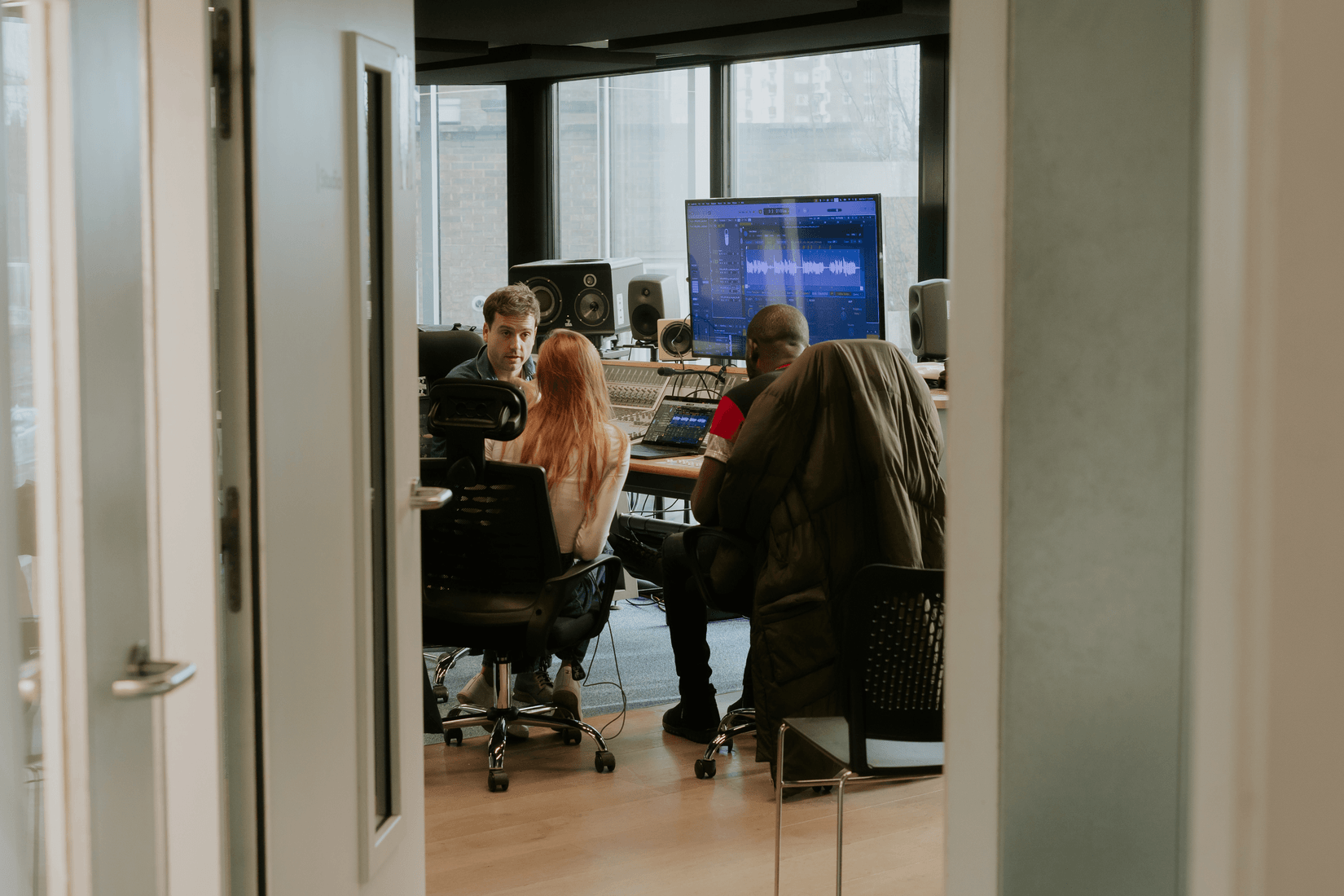
Studying music production can also remove some of those barriers. Rather than investing in expensive equipment straight away, you’ll have access to professional studios, industry-standard software and experienced tutors while developing your skills alongside other producers, artists and musicians.
Take the next step in your music production journey
If you’re looking to take your skills further, studying music production can provide the time, guidance and creative environment to accelerate your development. At LCCM, you’ll learn from experienced producers like Oliver, gain hands-on experience in industry-standard studios and collaborate with a community of performers, songwriters and fellow producers on real creative projects.