Home
Home
If you’ve spent any time creating music, you’ve probably found yourself drawn to different parts of the process. Maybe you love writing songs and developing musical ideas, or perhaps you enjoy sinking hours refining and mixing sounds together to make something new. These interests often point towards two key areas of the industry: composition and production.
Although the two paths can overlap, they each bring something different to the creative process. Let’s take a closer look at what composers and producers do, and how to decide which path might be right for you.
What Does a Composer Do?
Composers create the musical ideas that form the foundation of a piece of music. They write melodies, harmonies, arrangements and musical themes, whether for artists, film, television, games or live performance.
Composers think about how a piece of music should feel and how different musical elements work together to create emotional themes.
Some of the key skills composers rely on include:
- Melody and harmony writing
- Musical arrangement
- Creativity and storytelling
- Music theory and analysis
If you’re the kind of musician who’s constantly jotting down song ideas, experimenting with chord progressions or thinking about how music feels, composition may be where you feel most at home.
What Does a Music Producer Do?
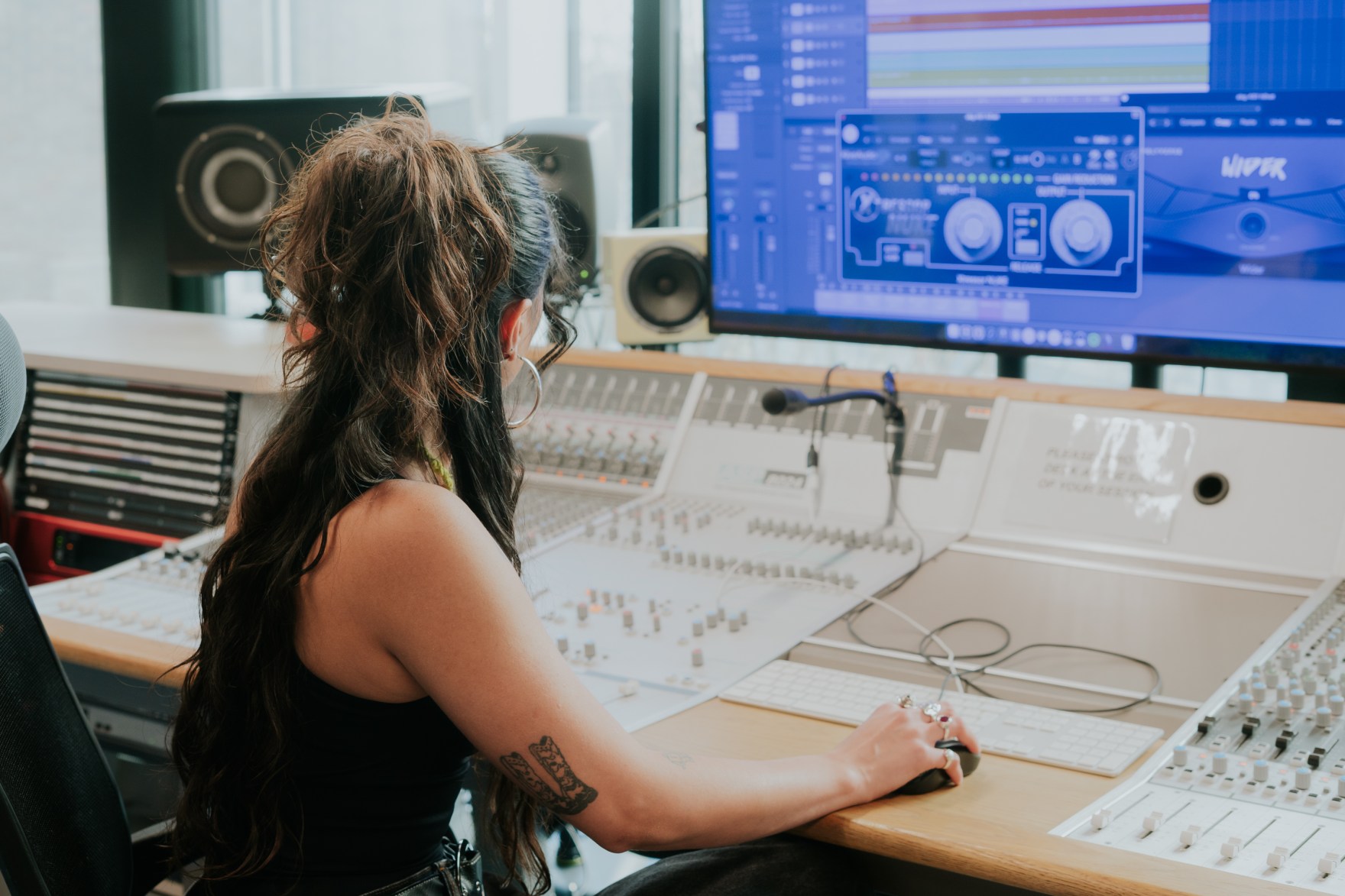
Producers work with artists and musicians to shape recordings, helping bring ideas to life in the studio. Depending on the project, they might oversee recording sessions, refine arrangements, experiment with sounds or guide the overall creative direction of a track.
Producers often develop skills such as:
- Audio recording and editing
- Sound design and mixing
- Project management
- Collaboration and communication
- Creative problem-solving
If you enjoy pulling songs apart to understand how they work, refining sounds or helping turn musical ideas into polished recordings, production could be a natural fit.
Key Differences Between Composers and Producers
While both roles contribute to the creation of music, they tend to focus on different stages of the process.
| Composer | Producer |
| Creates the musical ideas behind a project | Shapes how those ideas are developed and recorded |
| Focuses on melody, harmony and arrangement | Focuses on sound, performance and production |
| Often writes music for artists, film, TV, games and live performance | Often works directly with artists and recording projects |
| Thinks about what the music is saying | Thinks about how the music is experienced |
| Usually begins the creative process | Often helps guide a project through to completion |
Career Opportunities for Composers and Producers
Both composition and production can lead to a wide range of careers across the music and creative industries.
Career Opportunities for Composers
Composers can work across a variety of sectors, creating original music for different audiences and platforms.
Common career paths include:
- Songwriter: Writing music for artists, bands or personal projects.
- Film Composer: Creating scores for film and television.
- Game Composer: Writing music and soundtracks for video games.
- Media Composer: Producing music for advertising, podcasts, online content and branded campaigns.
- Orchestrator or Arranger: Adapting and developing music for different ensembles, performers or productions.
Career Opportunities for Producers
Producers often work at the intersection of creativity, technology and collaboration.
Career paths include:
- Music Producer: Developing and overseeing recording projects.
- Recording Producer: Working with artists in studio environments.
- Electronic Music Producer: Creating and releasing original music.
- Mixing or Post-Production Specialist: Refining recordings and shaping final releases.
- Artist-Producer: Writing, producing and releasing your own music.
Which Career Path Is Right for You?
There’s no right or wrong answer, and you don’t need to have your entire career mapped out from the beginning.
Composition may suit you if you:
- enjoy writing songs and musical ideas
- are interested in melody, harmony and arrangement
- enjoy expressing ideas and emotions through music
- like working with musical structure and storytelling
Production may suit you if you:
- enjoy working with recording technology and sound
- are curious about how tracks are built and refined
- like collaborating with artists and shaping creative projects
- enjoy experimenting with different sounds and techniques
You might discover that your skills and interests sit somewhere between the two. The more experience you gain, the easier it becomes to identify the aspects of music-making that excite you most.
Can You Be Both a Composer and a Producer?
Absolutely. Many of today’s musicians move between composition and production as part of their creative practice. Independent artists and creators often write, produce and release their own work, taking projects from an initial idea all the way through to a finished track.
That doesn’t mean you need to do everything yourself. However, developing skills across both areas can give you greater creative freedom, a deeper understanding of the music-making process and more career opportunities as you evolve.
The modern music industry increasingly values versatility, so having experience across multiple areas can help you adapt to different creative roles.
Explore Music Education at LCCM
One of the benefits of studying music is the opportunity to explore different creative roles while developing practical, industry-relevant skills.
At LCCM, our students work alongside performers, songwriters and producers as part of a creative community built around sharing ideas and making music together. You’ll also learn from lecturers who are actively working in the industry, bringing current knowledge and real-world experience into the classroom.
Whether you’re interested in writing music, mixing recordings or developing skills across both areas, our music programmes are designed to help you build your creative and professional practice. Music Production, Songwriting and Performance courses to discover where your interests could take you.
FAQs
A composer creates the musical ideas that form the basis of a piece of music, while a producer helps shape how that music is developed, recorded and presented.
Yes. Many modern musicians work across both disciplines, writing music while also producing recordings and overseeing creative projects.
Neither is inherently better. The right path depends on your interests, strengths and career goals. Many musicians choose to develop skills in both areas.
There is no single route into either career. However, studying music can help you develop technical skills, build a portfolio, collaborate with other musicians and gain valuable industry experience.